
A deal calculator that picks a side.
The Ledger is a tailored real estate investment calculator we built and use ourselves — every screen below is the actual live tool, running real numbers.
Spreadsheets don't tell you to walk away.
Most investors evaluate deals in scattered spreadsheets — one for rentals, another for flips, a third someone half-built for BRRRR years ago. Formulas break, assumptions get buried in cells nobody remembers editing, and there's no single moment where the deal actually tells you whether it's worth pursuing.
Rental, Flip, BRRRR, Wholesale, Mortgage, Rent-vs-Sell.
One tab switcher across the top swaps the entire calculation model underneath — purchase price, closing costs, rehab cost, down payment, interest rate, loan term, monthly rent, and every recurring cost line, all recalculating live as you type. Three deals are already saved and ready to compare side by side.
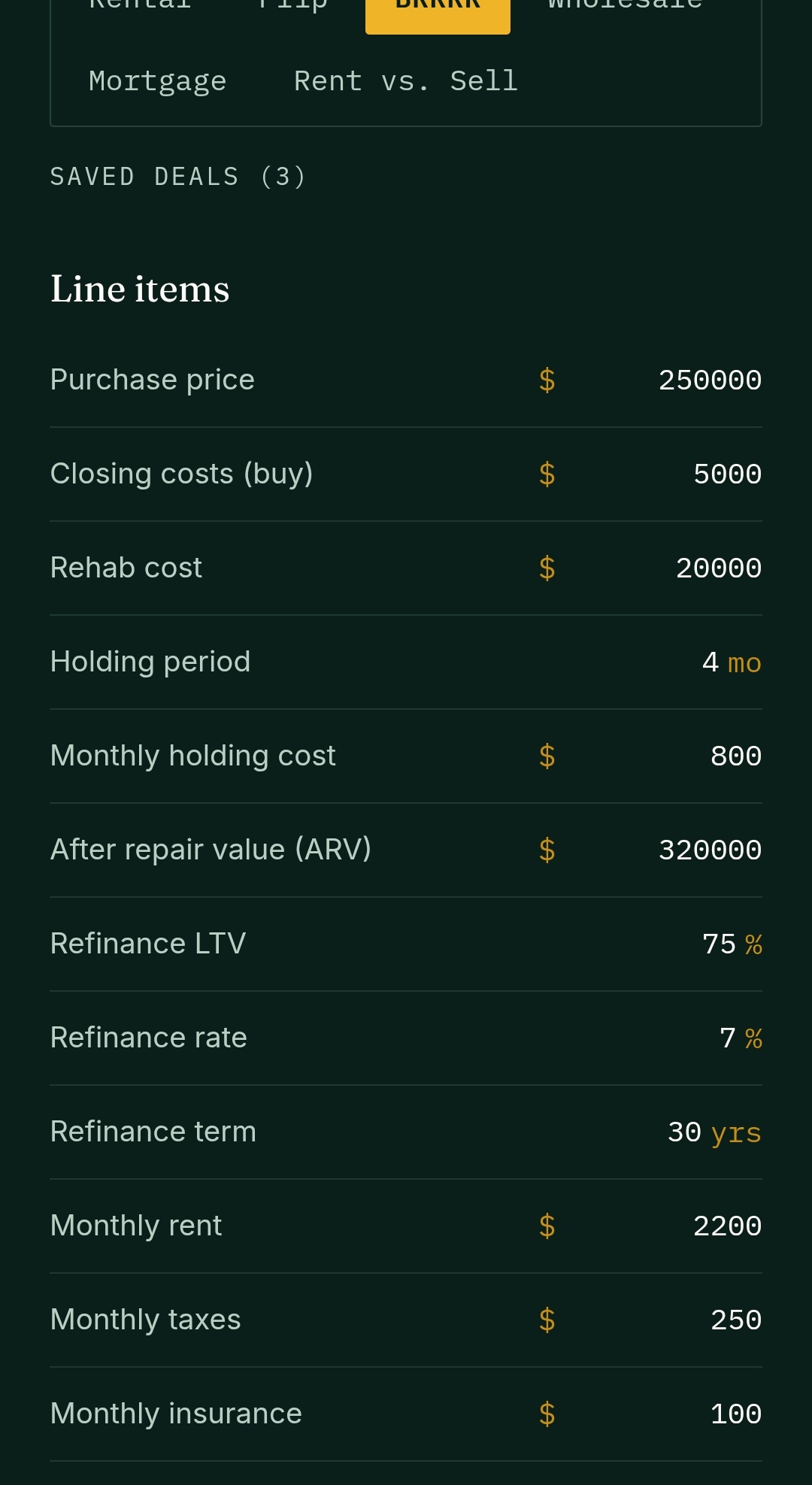
Rehab, refinance, and the numbers that decide it.
Switch to BRRRR and the fields change to match: rehab cost, holding period, after-repair value, and refinance LTV, rate, and term. This is the deal type that lives or dies on refinance math — so that's exactly where the model puts the weight.
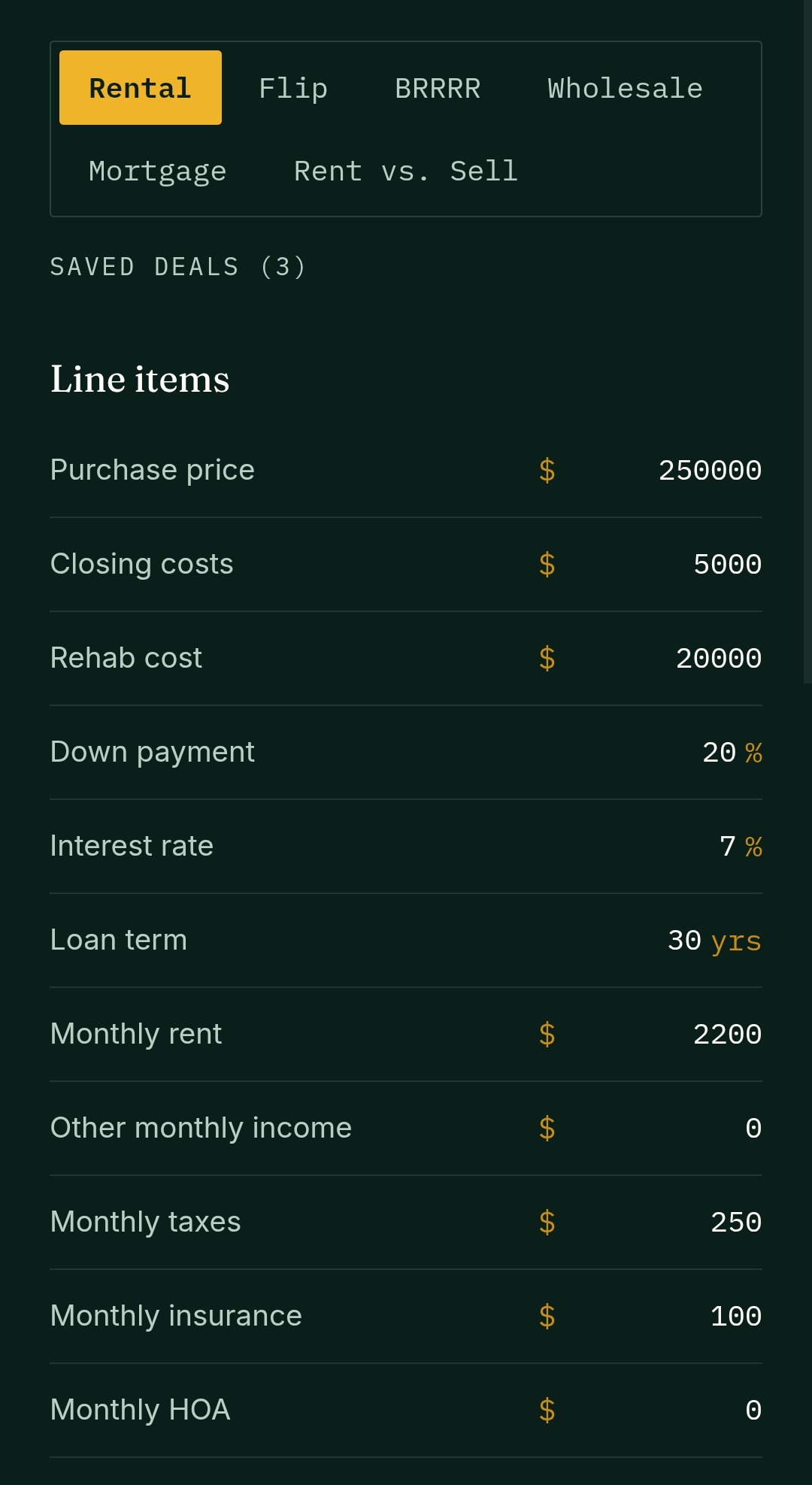
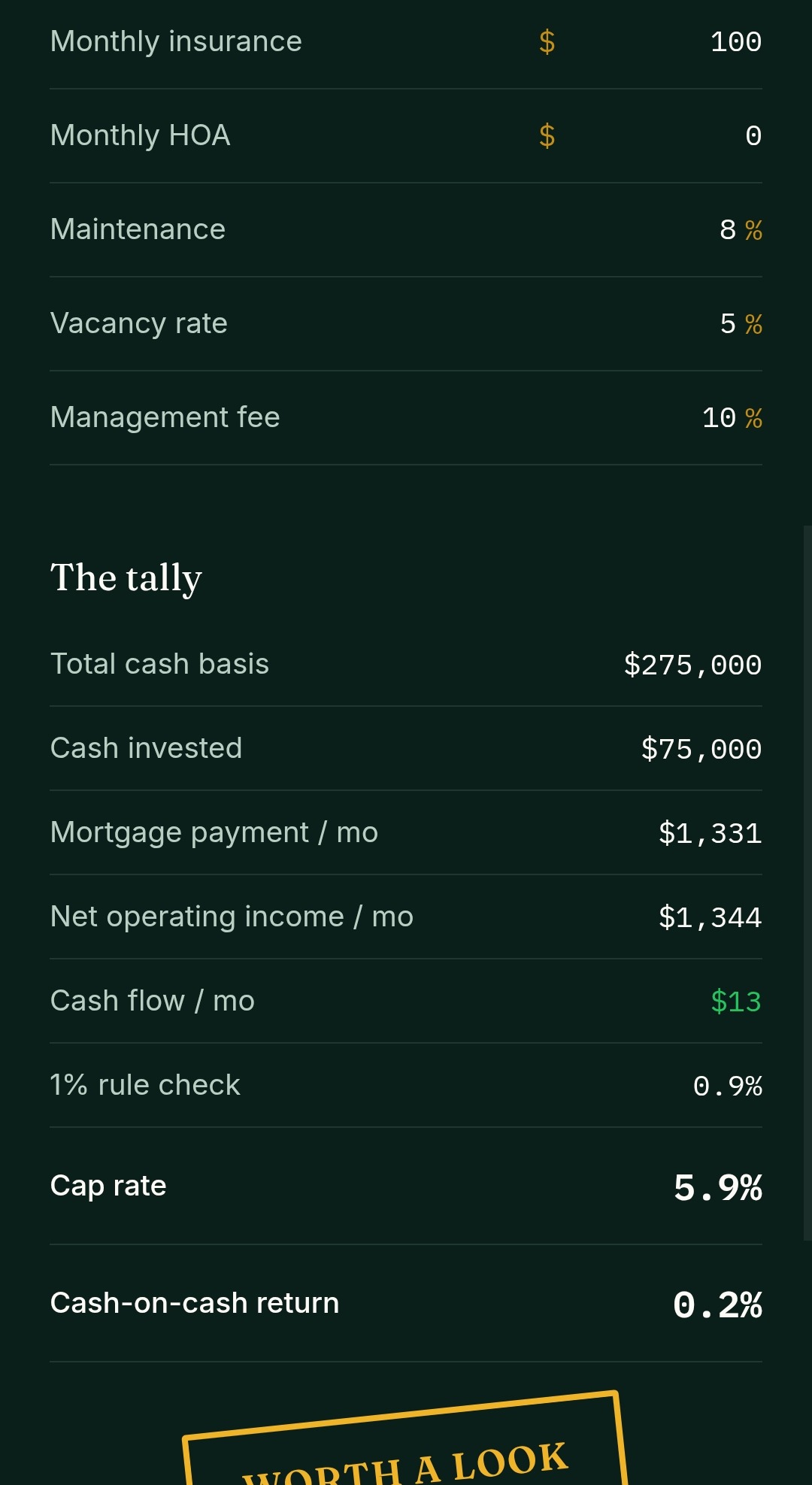
Cap rate, cash flow, and the 1% rule — computed, not eyeballed.
Every line item above feeds a summary block at the bottom: total cash basis, cash invested, monthly mortgage payment, net operating income, monthly cash flow, the 1% rule check, cap rate, and cash-on-cash return — the exact numbers an investor actually needs to make a call, in one place instead of scattered across a spreadsheet.
Same tool, same honesty, in the other direction.
Change the numbers and the stamp changes with it. This deal's cash flow went negative — -$253 a month, a -7.9% cash-on-cash return — and instead of softening that, The Ledger stamps it plainly: WALK AWAY. No spreadsheet is going to argue you out of a bad deal. This one won't either.
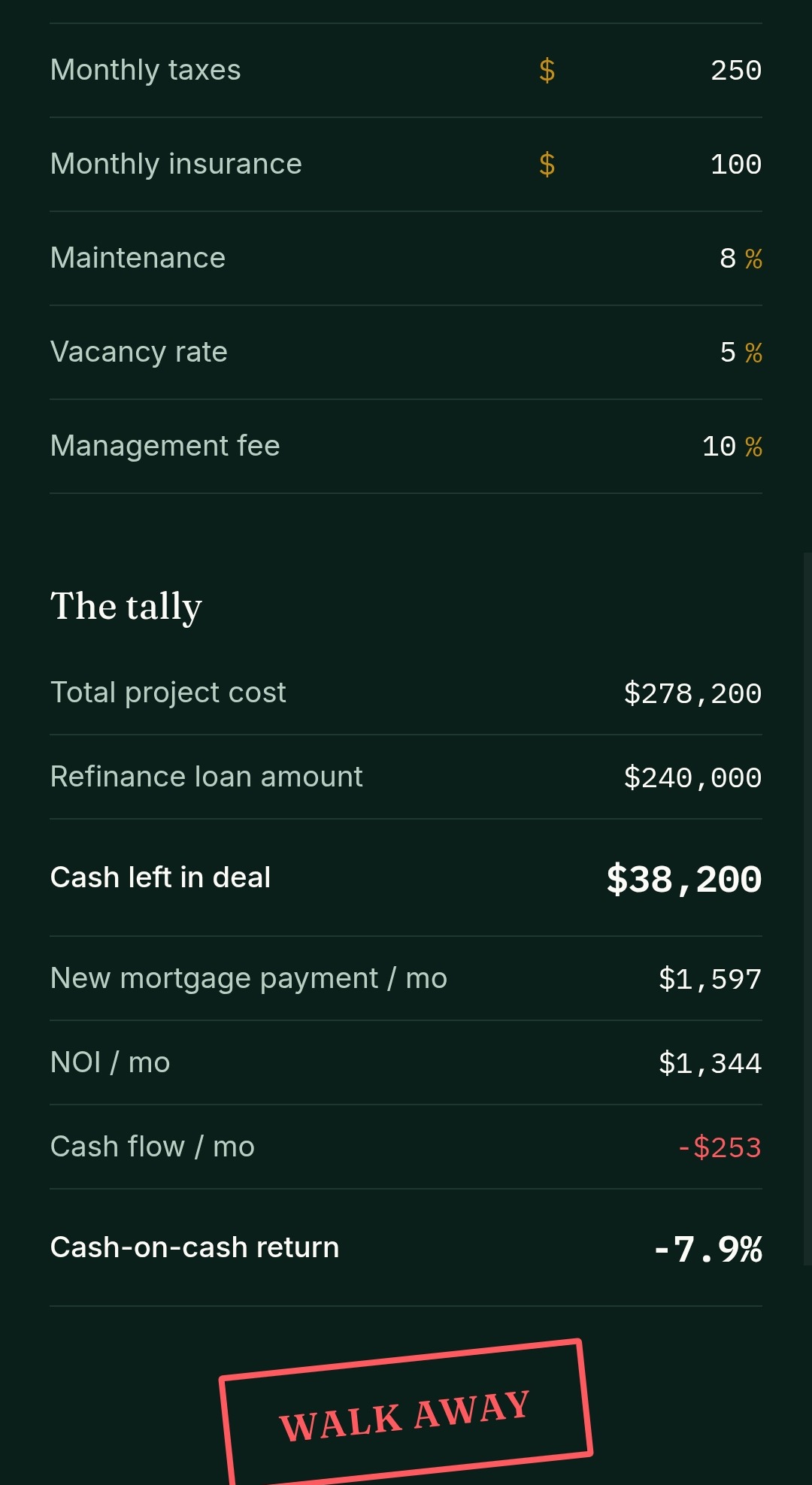
A calculator with an opinion.
Saved deals persist across sessions, every mode shares the same clean line-item structure, and the verdict at the bottom means nobody has to reverse-engineer whether a deal is actually good.